Overthinking and the Fridge: How Stress and Rumination Fuel Emotional Eating.
Overthinking and the Fridge: How Stress and Rumination Fuel Emotional Eating.
It's 9:47 PM. You've replayed the same conversation with your coworker four times, each time adding a slightly sharper comeback you'll never actually say. Somewhere around replay three, you find yourself standing in front of the open fridge, not really hungry, just looking. You take something out. You're not sure why. Subconsciously, you just needed the loop in your head to stop for a second.
If that scene feels familiar, you're not lacking willpower and you're not "bad" at eating. You're likely caught in one of the quieter feedback loops between the mind and the body: rumination feeding emotional eating, and emotional eating feeding right back into rumination.
What Rumination Actually Is

Rumination gets used loosely to mean "overthinking," but it has a specific shape. It's the mental habit of going over a problem, mistake, or worry again and again, usually without moving toward a solution. Unlike productive reflection, which asks, "What can I learn or do here?" rumination tends to circle the same few questions: why did this happen, what does it say about me, and what if it happens again? It may feel like problem-solving. However, mostly, it just wears a groove deeper into the same worry.
This matters because rumination isn't just uncomfortable; it's physiologically activating. It keeps the nervous system in a low simmer of stress, and stress hormones don't just affect mood. They affect appetite, cravings, and how strongly food registers as a source of relief.
Why the Fridge Feels Like an Answer
Eating is one of the fastest, most reliable ways to interrupt an unpleasant mental state. It's sensory, it's immediate, and it doesn't require solving anything. When you're stuck in a rumination loop, food offers something the loop can't: an actual stopping point. A few bites and, for a moment, the mental noise quiets down.
That relief is real, which is precisely why the pattern is so sticky. It isn't a moral failing that a cookie can interrupt a spiral of self-critical thoughts faster than willpower can. It's simply that eating engages the senses and the reward system directly, while rumination lives almost entirely in language and abstract worry. Reaching for food is, in a strange way, a reach for the present moment.
The trouble is what happens after. Eating in response to a thought loop rarely resolves the thought loop. The worry about the coworker, the mistake at work, or the argument that won't leave you alone… it's all still there once the food is gone. And now there's often a second layer on top: guilt or frustration about eating when you weren't hungry. That second layer is just more material for rumination to chew on, so the mind goes right back to circling, and the loop tightens.
The Loop, Named
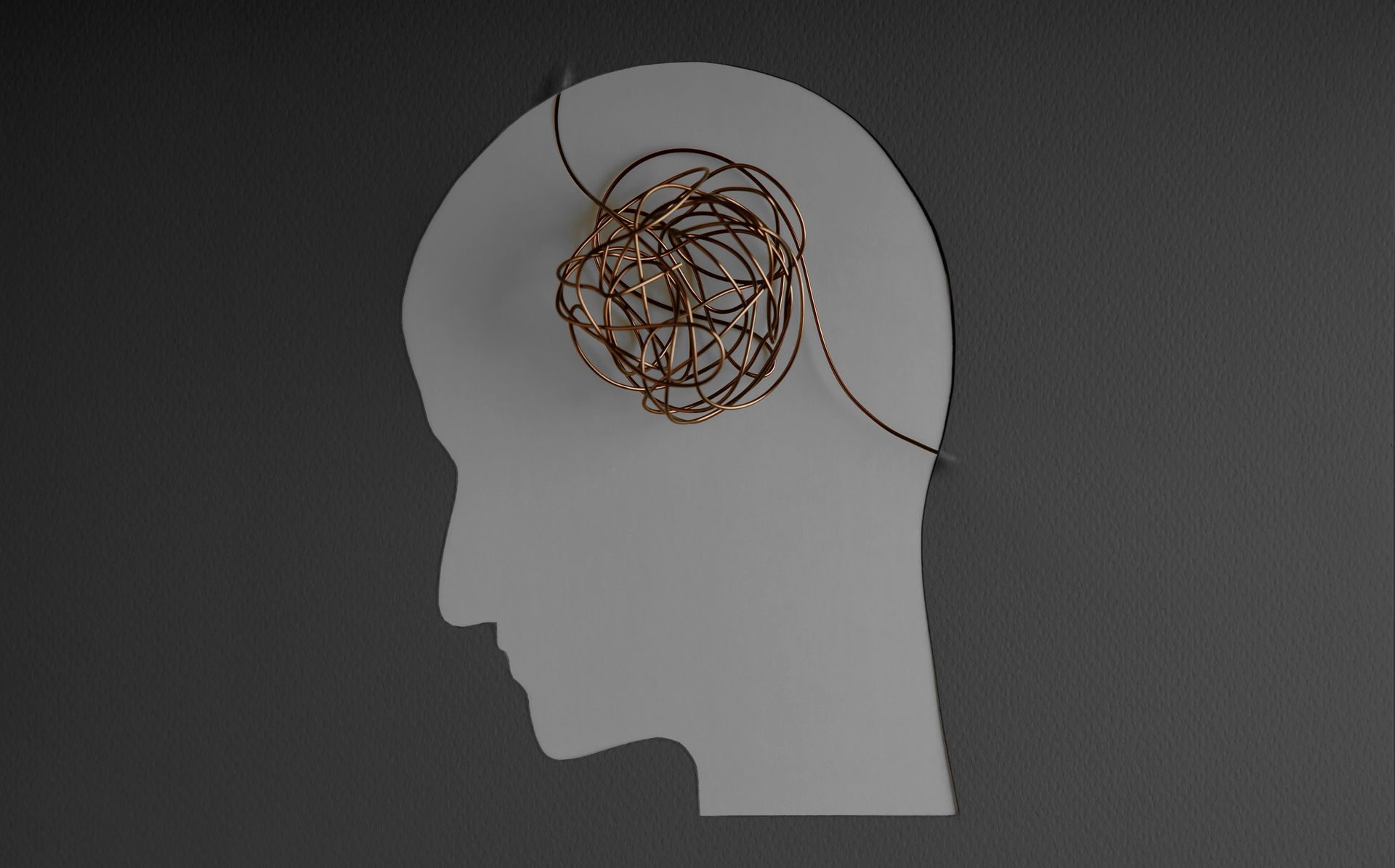
It tends to go something like this: a stressful or upsetting thought arises, rumination sets in, the internal discomfort builds, food offers a fast exit, the discomfort dips temporarily, and then guilt or self-judgment about the eating gives rumination fresh fuel. None of this happens because someone is weak-willed around food. It happens because the mind found a shortcut to feeling different, and the body was a willing participant.
Once you can see the shape of the loop, it stops feeling like a mystery and starts feeling like a pattern you can actually work with.
Loosening the Loop
You don't interrupt this pattern by white-knuckling your way past the fridge. That approach usually just adds another thing to ruminate about later. It helps more to work with the rumination itself, since that's the engine driving the whole cycle.
One useful move is simply naming what's happening in the moment: "I'm not hungry, I'm looping on that conversation again." Naming it doesn't make the urge vanish, but it creates a sliver of space between the thought and the automatic reach for food, and that sliver is where choice lives.
It also helps to give the nervous system a different way to discharge the activation that rumination builds up. A short walk, stepping outside, or even a few minutes of stretching can offer a similar kind of relief to eating, minus the guilt loop afterward, because it addresses the restlessness the thoughts created rather than just muting it.
And it's worth getting curious about the thought itself rather than just the urge to eat. Rumination usually asks unanswerable questions. Redirecting toward a more concrete one, such as "what would help right now," or "what does this feeling actually need," can sometimes shift the loop from circling to resolving.
None of this requires perfection. The goal isn't to never eat in response to a difficult thought again. It's to notice the pattern with a little more curiosity and a little less judgment, since judgment is often what keeps the loop spinning in the first place.
The Real Target Isn't the Fridge

The fridge was never really the problem. It's just where an unresolved thought sometimes ends up looking for relief. When rumination quiets down, even a little, the pull toward food as an escape hatch tends to loosen along with it. That's not a diet strategy. It's closer to learning to sit with your own mind for a few extra seconds before deciding what you actually need.